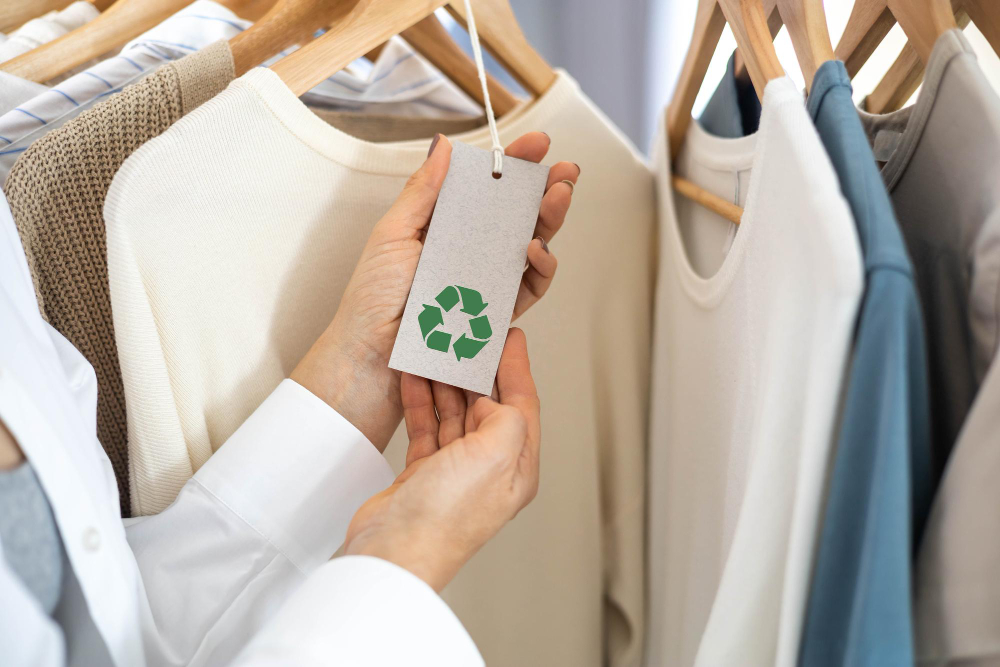
In recent years, sustainability has gone from being a “nice-to-have” to a must-have in the global garment industry. International buyers — from fast-fashion brands to high-end labels — now include sustainability clauses in supplier agreements.
For Indian apparel units, the challenge isn’t whether to adopt sustainable practices, but how to do it affordably without affecting production speed and margins. Fortunately, there are multiple low-cost, high-impact changes that Indian factories can adopt to meet buyer expectations, reduce operational costs, and tap into new market opportunities.
Why Sustainability is Business-Critical
1. Buyer Preferences
Brands like H&M, Zara, Levi’s now prioritize suppliers with sustainability certifications such as GOTS, OEKO-TEX, or BCI.
Non-compliance can mean losing long-term contracts.
2. Regulatory Requirements
Indian states like Tamil Nadu have made Zero Liquid Discharge (ZLD) mandatory for dyeing units.
Export markets (especially the EU) are tightening import regulations on environmental compliance.
3. Cost Savings
Many sustainable upgrades — like switching to LED lighting or installing solar panels — have a direct ROI within 2–5 years.
Affordable Sustainability Measures for Indian Garment Units
1. Energy Efficiency
Switch to LED Lighting:
Cost: ₹500–₹800 per LED fixture.
ROI: Within 12–18 months through reduced electricity bills.
Upgrade Motors and Compressors:
Using energy-efficient motors can save up to 10–15% power costs.
2. Water Management
Rainwater Harvesting Systems:
Government subsidies available in states like Tamil Nadu, Karnataka, and Maharashtra.
Reduces dependence on municipal or borewell water.
Water Recycling for Washing Units:
Basic filtration systems can reuse up to 60–70% of process water.
3. Waste Reduction & Recycling
Fabric Scrap Recycling:
Partner with textile recyclers in Panipat, Tiruppur, and Ludhiana.
Can convert waste into insulation materials or recycled yarn.
Digital Pattern-Making (CAD):
Reduces cutting wastage by up to 12%.
4. Renewable Energy Adoption
Rooftop Solar Installations:
Capital subsidies available under MNRE schemes.
Reduces dependency on grid electricity; power bills can drop by 30–50%.
Solar Water Heating for Dyeing Units:
Cuts down on fossil fuel use for heating water.
5. Eco-Friendly Packaging
Replace virgin plastic polybags with compostable or recycled alternatives.
Use FSC-certified paperboard for tags and boxes.
Cost vs. Impact Matrix for Indian Factories
| Sustainability Measure | Initial Cost (Approx) | ROI Period | Buyer Impact |
|---|---|---|---|
| LED Lighting | ₹50,000 – ₹1 lakh | 1–1.5 yrs | Medium |
| Rainwater Harvesting | ₹2–3 lakhs | 2–3 yrs | Medium |
| Solar Power (25kW) | ₹10–12 lakhs | 3–5 yrs | High |
| Fabric Recycling | Minimal | Immediate | Medium |
| CAD Pattern-Making | ₹2–5 lakhs | 1–2 yrs | High |
Government & Industry Support
1. ATUFS (Amended Technology Upgradation Fund Scheme)
Offers up to 15% capital subsidy for machinery upgrades that improve energy efficiency and reduce waste.
2. State-Level Solar Incentives
Many states offer net metering benefits for solar energy users, allowing excess power to be sold back to the grid.
3. Export Promotion Council Initiatives
Apparel Export Promotion Council (AEPC) regularly organizes training on sustainable practices and connects suppliers to eco-conscious buyers.
Case Study: Tiruppur Knitwear Unit Goes Green Without Breaking the Bank
A mid-sized knitwear factory in Tiruppur supplying European brands wanted to meet sustainability requirements without hurting margins.
Steps Taken:
Switched all lighting to LEDs (investment: ₹80,000).
Installed a rainwater harvesting system (₹2.5 lakhs).
Adopted CAD-based marker planning to reduce fabric waste by 9%.
Results after 18 months:
Power costs down by 28%.
Water bills reduced by 40%.
Secured a new €2 million order from a European buyer citing sustainability compliance.
How Texflow Can Help with Sustainable Production Tracking
One challenge Indian factories face is proving sustainability claims to buyers. Texflow can:
Maintain digital records of water and energy consumption.
Track waste recycling rates.
Generate sustainability compliance reports for buyer audits.
This data not only strengthens credibility but also improves chances of winning higher-value contracts.
Conclusion
Sustainability in garment manufacturing doesn’t have to be expensive or disruptive. By adopting affordable measures like LED lighting, CAD pattern-making, rainwater harvesting, and waste recycling, Indian apparel units can reduce costs, meet buyer demands, and gain a competitive edge.
The key is to start small, measure impact, and build a culture of sustainability across the production floor.